
Female Hair Loss: Why Diagnosis Matters Before Treatment
If you've noticed more hair on your pillow, a widening part, finer strands or that your ponytail just doesn't feel quite as full as it used to, it's understandable to want to do something about it.
But before you start adding supplements, changing your shampoo or booking a treatment, there's something I always want to establish first: why is the hair changing in the first place?
Female pattern hair loss, temporary shedding, hormonal changes, nutritional deficiencies and inflammatory scalp conditions can all look similar at first, but they don't necessarily need the same approach.
This is why I believe diagnosis should come before treatment.
Not All Hair Loss Looks the Same
One of the most common patterns I see in women is female pattern hair loss, where the individual strands gradually become finer and overall density reduces, particularly through the central scalp. You may notice your part becoming wider or that your ponytail feels smaller than it once did.
But not all thinning happens gradually.
A sudden increase in shedding can indicate a different process. Telogen effluvium, for example, may occur after illness, surgery, childbirth, significant physical or psychological stress, rapid weight change or certain medications.
Patchy loss, scalp discomfort, inflammation or areas where follicle openings are no longer visible may point to another condition and warrant timely medical assessment. The visible pattern is only one part of the diagnosis; timing, progression and scalp health are equally important.
What Could Be Contributing to Your Hair Loss?
There isn't always one obvious cause.
Genetics and hormonal influences can contribute to progressive thinning, while illness, surgery, childbirth, significant stress, rapid weight change or certain medications can trigger increased shedding. Nutritional deficiencies, particularly low iron, as well as thyroid dysfunction may also play a role. In other cases, inflammation or autoimmune conditions affecting the scalp can contribute to hair loss, while repeated tension from hairstyles or ongoing hair damage can affect the follicles over time.
This is why I look beyond the hair itself when assessing hair loss.
Not every factor is relevant to every patient. Blood tests or further investigation may be recommended when the history and examination provide a clinical reason for them.
How Female Hair Loss Is Assessed
When I assess hair loss, I'm looking at much more than how much hair is in your brush.
I'll consider where the density has changed, whether the process has been gradual or sudden, whether you're actively shedding, what your scalp looks and feels like, your medical history, medications, nutrition, family history and anything that may have changed around the time you first noticed the problem.
Scalp examination and trichoscopy provide a magnified view of the hair and follicle openings. This can reveal variation in strand diameter, follicular miniaturisation, inflammation and other features that are not apparent during an ordinary examination.
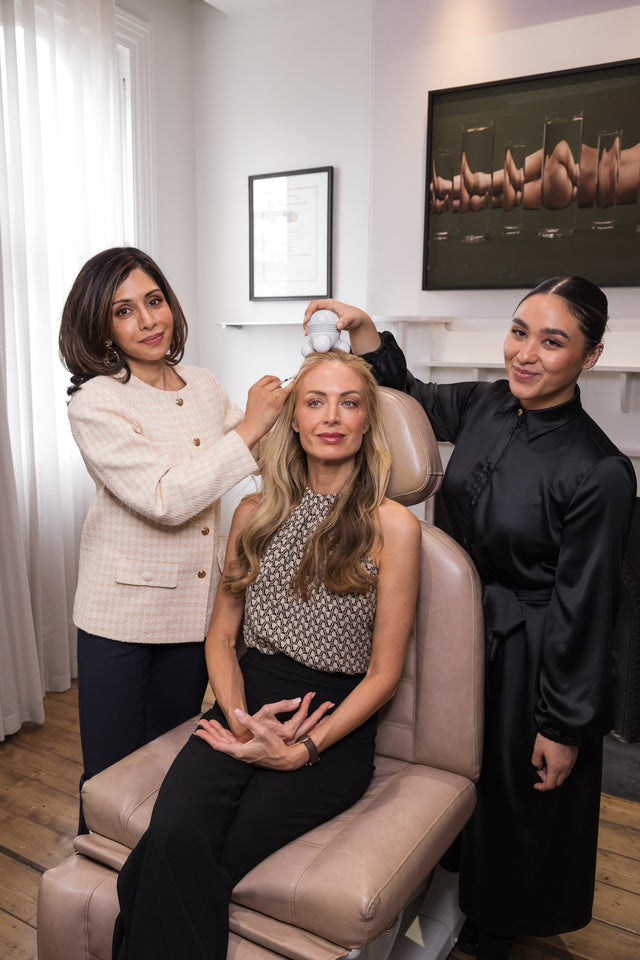
Dr Shammi's approach to female hair loss treatment begins with this diagnostic distinction, allowing the management plan to reflect the underlying pattern rather than defaulting to a standardised product or procedure. This can help me identify things that aren't always obvious to the naked eye, And this is where the diagnosis really matters.

Why Your Diagnosis Changes Your Treatment Plan
If you're experiencing progressive follicular miniaturisation, the approach is different from treating temporary shedding. If a nutritional or hormonal factor is contributing, that needs to be considered. If there is inflammation affecting the scalp, that needs to be addressed. And if several things are happening at once, the treatment plan may need to address more than one of them.
Where prescription treatment is appropriate, I'll explain the potential benefits, limitations, risks and monitoring involved so that you can make an informed decision about whether it's right for you.
Where a procedural component is clinically appropriate, the Doctor Shammi Hair Loss Protocol may be discussed as one part of a broader plan rather than as a universal solution. And where a treatment is clinically appropriate, the Doctor Shammi Hair Loss Protocol may form one part of that plan. It isn't a universal treatment for every type of hair loss, and that's exactly why the assessment comes first.
What to expect
This is something I think is important to talk about before starting any hair loss treatment. The goal isn't always simply to grow more hair. For some of my clients, an important objective is slowing or stabilising further loss. For others, we may be looking to support improvement in density or hair calibre. And when shedding is temporary, the focus may be on identifying and addressing the underlying trigger.
Hair operates on a slow biological cycle, so meaningful changes in density are measured over months rather than weeks. I also like to use consistent clinical photography and review assessments where appropriate. Looking at the same areas over time gives me a much more useful picture than judging your hair from one day to the next.
And while there are treatments that can help in the right client, no treatment can promise to return everyone's hair to the density they had in their teens.
Lets Start With the Diagnosis, Not the Treatment
If you're noticing changes in your hair, you don't need to arrive knowing which treatment you need.That's my job.
My role is to assess the pattern, understand what may be contributing to it and then explain which options may be appropriate for your individual presentation. Because when it comes to female hair loss, I don't want to treat what you can see on the surface. I want to understand what's happening underneath it.
A dermatologist-led hair loss assessment is the starting point.
General information only. This article does not replace an individual medical assessment. Treatment suitability, risks and expected outcomes vary between patients.
0 comments